Blog
Air Source Heat Pump Maintenance Checklist for Homeowners

Practical heat pump maintenance checklist for homeowners
Keeping your air source heat pump well maintained need not be complicated. This heat pump maintenance checklist sets out the simple monthly, quarterly and annual checks that homeowners can use to preserve efficiency, reduce breakdown risk and meet the expectations of most manufacturer warranties.
Why routine maintenance matters
Heat pumps work hardest when the weather is cold and damp, such as frosty mornings across Coventry and Birmingham. A blocked grille, poor airflow or degraded insulation on pipework makes the system work harder than necessary, increasing electricity use and wear on components. Regular homeowner checks, combined with a yearly professional service, help the system deliver steady heat, extend its working life and provide documentary evidence for warranty claims.
Benefits at a glance
- Improved efficiency: Cleaner components and clear airflow mean the pump uses less energy to provide the same heat.
- Greater reliability: Early detection of faults reduces the likelihood of costly emergency repairs.
- Warranty protection: Many manufacturers require proof of regular servicing to support warranty claims.
Monthly homeowner checks you can do safely
Most safe, effective maintenance is visual or light cleaning. Never remove panels, touch wiring or attempt to adjust refrigerant levels — leave anything technical to a qualified heat pump engineer.
Quick safety rules before you start
- Turn the system off at the controls before cleaning around the unit.
- Never open the outdoor unit casing or touch internal components.
- Use a soft brush or cloth — avoid pressure washers and harsh chemicals.
- Keep a simple log of what you checked and when.
Outdoor unit: clearances and debris
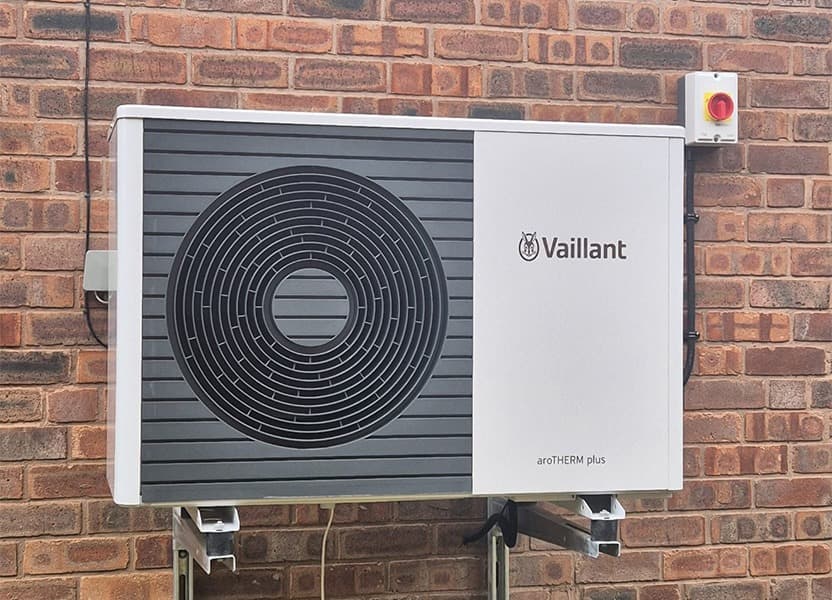
Ensure the outdoor unit has adequate airflow — check there is at least 30 cm of clear space around all sides and ideally more at the front. Remove leaves, rubbish and cobwebs from the grille and casing, and trim back any plants or shrubs that encroach. Avoid storing bikes, garden furniture or other items near the unit.
Inspect fins, ice and blockages
Look through the grille at the coil fins. They should appear broadly straight and free from heavy crushing. Thin frost during cold spells is normal if it clears during the defrost cycle. If the unit becomes buried in heavy ice that does not melt, or thick sheets of ice collect at the base, do not chip it off — turn the system off and contact a professional as this can indicate a fault.
Indoor vents, radiators and filters
Check that radiators, fan convectors and air outlets are not blocked by furniture, curtains or drying laundry. Restricted airflow causes uneven temperatures and higher running times. Dust visible grilles with a soft brush or vacuum attachment. If your system has user-removable filters, clean or replace them following the manufacturer’s instructions.
Noise, vibration and condensate
Listen for unusual sounds. A steady hum and gentle fan noise are normal; rattling, grinding, buzzing or strong vibrations are not and should be inspected by an engineer. Check condensate drain areas and visible pipework for blockages, standing water or leaks where pipes enter the property.
Quarterly checks to keep things running smoothly
Every three months, spend a little more time on the system to catch developing issues early — especially before and after the main heating season.
Safe cleaning tasks
- Wipe the outdoor casing with a damp cloth to remove surface dirt and algae stains. Take care not to force anything into the grille or bend the fins, and never use a pressure washer as this can ruin the coil.
- Indoors, clean dust from accessible grilles and casings and vacuum user-serviceable filters as stated by the manufacturer.
- If dirt or debris is heavy and inaccessible, note it for your professional service.
Leave sensitive tasks to professionals
Coil cleaning, internal fan cleaning and any work that involves removing panels should be carried out by a trained engineer. Incorrect cleaning can reduce efficiency or cause damage.
What a thorough annual service should include
Arrange a professional service each year, ideally before the coldest months. A trained engineer will perform checks and tests that are beyond homeowner capability.
Refrigerant and F-gas checks
Only engineers with the correct F-gas qualifications should work on refrigerant circuits. They will inspect for leaks, confirm the correct refrigerant charge and check pipe insulation. Incorrect refrigerant levels reduce efficiency and can shorten compressor life.
Electrical safety and connections
The service should include inspection and testing of electrical connections, isolators and safety devices. Engineers will ensure cables are secure, the unit is properly earthed and there are no signs of corrosion or damage that could cause tripping or intermittent faults.
Pressure, flow rates and controls
Proper system pressure and water flow are essential, particularly for underfloor heating and larger radiator circuits. An engineer may check pump operation, valves and system pressure, and review thermostat settings, weather compensation and timing. Small adjustments can noticeably improve comfort and running costs.
Defrost cycle and cold-weather operation
In the Midlands, winter frosts are common, so ensuring the defrost cycle operates correctly is important. Your engineer should confirm the pump defrosts effectively and investigate excessive defrosting or drainage issues that lead to ice build-up.
Common misconceptions about heat pumps
- Heat pumps do not operate like boilers. They typically run for longer periods at lower flow temperatures rather than short, hot bursts.
- Radiators may feel warm rather than very hot compared with gas or oil systems, but a correctly configured heat pump will still maintain comfortable room temperatures.
Warning signs that need an engineer
Contact a professional promptly if you notice any of the following:
- Frequent or prolonged defrost cycles, or heavy ice that does not clear.
- Short-cycling (system repeatedly switching on and off).
- Persistently lukewarm radiators or underfloor circuits despite correct settings.
- Error codes, warning lights or unusual smells such as burning or strong chemical odours.
Next steps and arranging professional maintenance
Use this heat pump maintenance checklist to guide regular quick checks and keep a simple log of findings. For deeper cleaning, annual servicing or any suspected faults, book a visit from an experienced local engineer. If you are in the Coventry or Birmingham area and would like to book servicing or maintenance, contact JLN Plumbing & Heating Ltd on 02476677667. You can also visit our heat pump services page for more guidance.
Other Articles