Blog
Heat Pump vs Boiler: Choosing the Best Heating for Coventry Homes

Heat pump vs boiler: which suits your Coventry home?
If your boiler is getting old or you are planning major upgrades to your heating, you might be wondering whether to stick with a modern boiler or move to a heat pump. The right choice depends less on trends and more on how your Coventry home is built and how you like to live in it. This guide explains how each system works, the practical implications for different house types, and the questions to ask during a survey.
How heat pumps and boilers heat your home
An air source heat pump operates like a refrigerator in reverse, extracting heat from outside air and lifting it to a usable temperature. Heat pumps typically run at lower flow temperatures, often around 35–50°C, and deliver the best efficiency when they run steadily over longer periods.
Modern gas boilers run at higher flow temperatures, commonly around 60–70°C or higher, and can increase heat output quickly. That rapid response helps smaller radiators warm a room faster, so boilers are often a better fit where quick bursts of heat are needed.
Practical differences:
- Heat pump: Lower temperature water, slower warm-up, steady background comfort once up to temperature.
- Boiler: Higher temperature water, faster warm-up, more on/off cycling unless controlled carefully.
- Hybrid: Combines both technologies so a boiler can provide top-up heat at peak demand or in very cold conditions.
Comfort, radiator sizing and emitter requirements
Heat pumps deliver comfort through larger emitter surface areas that distribute gentle warmth. That usually means fitting larger radiators, more radiators, or installing underfloor heating. Retaining small, compact radiators may force the system to run at higher temperatures and reduce the pump’s efficiency.
Condensing boilers are generally more tolerant of existing radiator layouts because they can deliver higher temperatures. Even so, using larger emitters with any system lets your heating run at lower flow temperatures and improves efficiency. If you’re considering a heat pump, expect a focused discussion about radiator sizes — rooms that feel barely adequate with your current boiler may need upgrading, especially larger lounges, north-facing rooms and heavily glazed areas.
Insulation, airtightness and building fabric
Heat pumps perform best in homes that retain heat. Effective loft insulation, cavity or internal wall insulation, and reasonably airtight windows and doors reduce heat loss and make a low-temperature system far more practical. The better the building fabric, the easier it is for a heat pump to maintain comfort.
Boilers are more forgiving in draughty or poorly insulated homes because they can raise water temperatures to compensate. Improvements to insulation, however, benefit any heating system by cutting energy consumption and improving comfort.
If your home currently has significant heat loss, a heat pump is not impossible, but you should be prepared for radiator upgrades, running at higher temperatures, or a hybrid arrangement where a boiler supports the heat pump on the coldest days.
Hot water storage and space considerations
Most air source heat pumps pair with a hot water cylinder, often larger than a traditional airing-cupboard cylinder. You will need suitable cupboard, loft or utility space for a cylinder plus pipework and controls. Space constraints are a common consideration for terraced homes.
Boilers offer more flexibility: system or regular boilers use a cylinder, while combi boilers provide hot water on demand without storage. If you lack room for a cylinder or prefer not to store hot water, a combi boiler may be the simpler option for your layout. Hybrid systems typically retain a cylinder so the heat pump can manage the bulk of demand while the boiler supplies top-up heat if needed.
Noise, outdoor units and placement basics
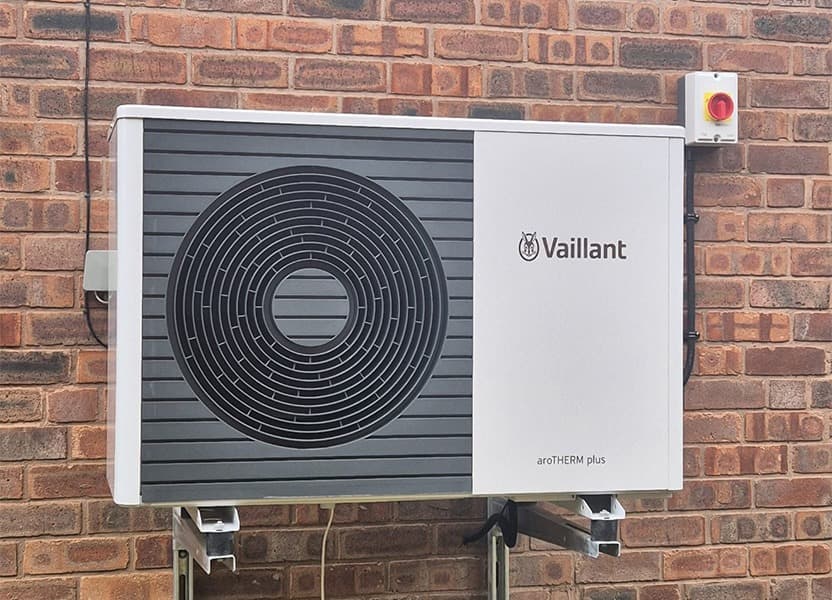
Air source heat pumps include an outdoor unit with a fan and compressor. Modern units are relatively quiet, but installation location matters for household comfort and neighbour relations. Installers look for a solid base or a wall bracket position away from bedroom windows, with good airflow and servicing access. Local planning rules and boundary considerations are also taken into account.
Boiler-only systems generally have their main noise source inside the property, often in a kitchen, utility or loft. Flue routing is important for safety and comfort, but there’s no external fan unit to site.
Common Coventry and Warwickshire house types — practical notes
Victorian terraces
Many terraces have solid walls, limited outside space and small cupboards. Heat pumps can work well but usually after careful attention to insulation and radiator sizing. Finding space for a cylinder can be the biggest challenge, and outdoor units may need siting in a rear yard or side return with neighbour access considered.
1930s semis
These properties often offer loft space and driveways, which helps with cylinder storage and outdoor unit siting. Cavity wall insulation and a good loft make them good candidates for heat pumps, though some rooms may still need larger radiators. A modern boiler remains a straightforward option for those preferring minimal layout changes.
Newer estate homes
New-build and later-20th-century estates usually have better insulation and double glazing, making them strong candidates for low-temperature systems like heat pumps. Builders sometimes fit radiators sized for boilers, so a heat pump upgrade may still require some emitter changes. Gardens and side paths often simplify outdoor unit placement.
Servicing and maintenance expectations
Heat pumps should receive an annual service to check refrigerant, electrical connections, filters and performance. The outdoor unit may also need occasional clearing of leaves and debris. Boilers likewise require an annual service for safety checks, flue inspection and combustion testing. Both systems benefit from regular system water treatment and filter maintenance to keep radiators and pipework free of deposits.
Quick decision checklist for Coventry homeowners
- Insulation: Is your home well insulated, or are upgrades planned?
- Space: Can you accommodate a cylinder and an outdoor unit?
- Radiators: Are you prepared to upgrade emitters if needed?
- Comfort preference: Do you want steady background warmth or rapid temperature boosts?
- Future plans: Are extensions, underfloor heating or major renovations likely soon?
What a professional survey covers
A detailed survey clarifies whether a heat pump, boiler or hybrid system is the best fit. An engineer will measure rooms, inspect your radiators and evaluate boiler controls and pipework. They will assess insulation levels, window performance and airtightness to estimate heat demand. For heat pump options, the survey identifies potential outdoor unit and cylinder locations and highlights any planning considerations. Expect clear recommendations about radiator sizing, ducting or pipework changes, and whether a hybrid system makes sense for your property.
Next steps with JLN Plumbing & Heating Ltd
For tailored advice in Coventry and Warwickshire, book a survey so an engineer can assess your property and explain the realistic options. Explore air source solutions on our Heat Pumps page, review boiler installations on our Boilers page, or read about replacing radiators and system upgrades on our Central Heating Systems page.
You can also call JLN Plumbing & Heating Ltd on 024 7667 7667 to discuss the best approach for your home, or get in touch via our contact page to arrange a visit and get a tailored recommendation.
Other Articles